
Searching Antrim Cases by Name
MiCOURT Case Search gives the public a single statewide doorway into Antrim County case histories. Get past the terms screen first. Pick your court, then open the name panel. A name search needs a Last Name or Business entry. First Name, Middle Name, and Birth Year just narrow things down. Type the full last name plus a first name. Set the court and case category, and only widen the terms if nothing comes back. One reason to start tight: the categories each Antrim court makes public differ. A broad sweep can bury the case you want.
- Identify the court from the citation, filing, notice, or known case type.
- Open MiCOURT and select Antrim’s relevant court or choose Select Another Court.
- Enter Last Name or Business, then add first name and middle name if known.
- Use Birth Year only as a year field when needed; do not enter a full date of birth in an ordinary public search.
- Compare the case number, participant or caption, court, filing date, status, and type before opening details.
| Field label | Type | Required | Use |
|---|---|---|---|
| Select court | Selector | Unspecified | Choose 13th Circuit, 86th District, or Probate where publicly listed. |
| Last Name or Business | Text | Yes for name search | Primary participant or business search field. |
| First / Middle Name | Text | No | Narrows a common name result. |
| Birth Year | Number | No | Year only on the public screen. |
| Filter | Expandable control | No | Apply after confirming court and category. |
Antrim Case Search Court Selection
Picking the wrong court is the most common reason an Antrim docket search fails. Felonies, major civil matters, and family division files sit in the 13th Circuit Court, and the Antrim County Clerk keeps the criminal, civil, and family pleadings. Misdemeanors, traffic cases, civil claims up to $25,000, small claims, and summary proceedings belong to the 86th District Court. Probate and Family matters run through their own office, with many protected categories. Antrim villages have no municipal court.
Cases also travel. A felony can open in District Court for probable-cause work, then land in Circuit Court. A District Court appeal goes up to Circuit Court too. So choose the court holding the event you care about, then read the case number and current status to decide whether another record stream matters. The county's own court map page spells out which office does what.
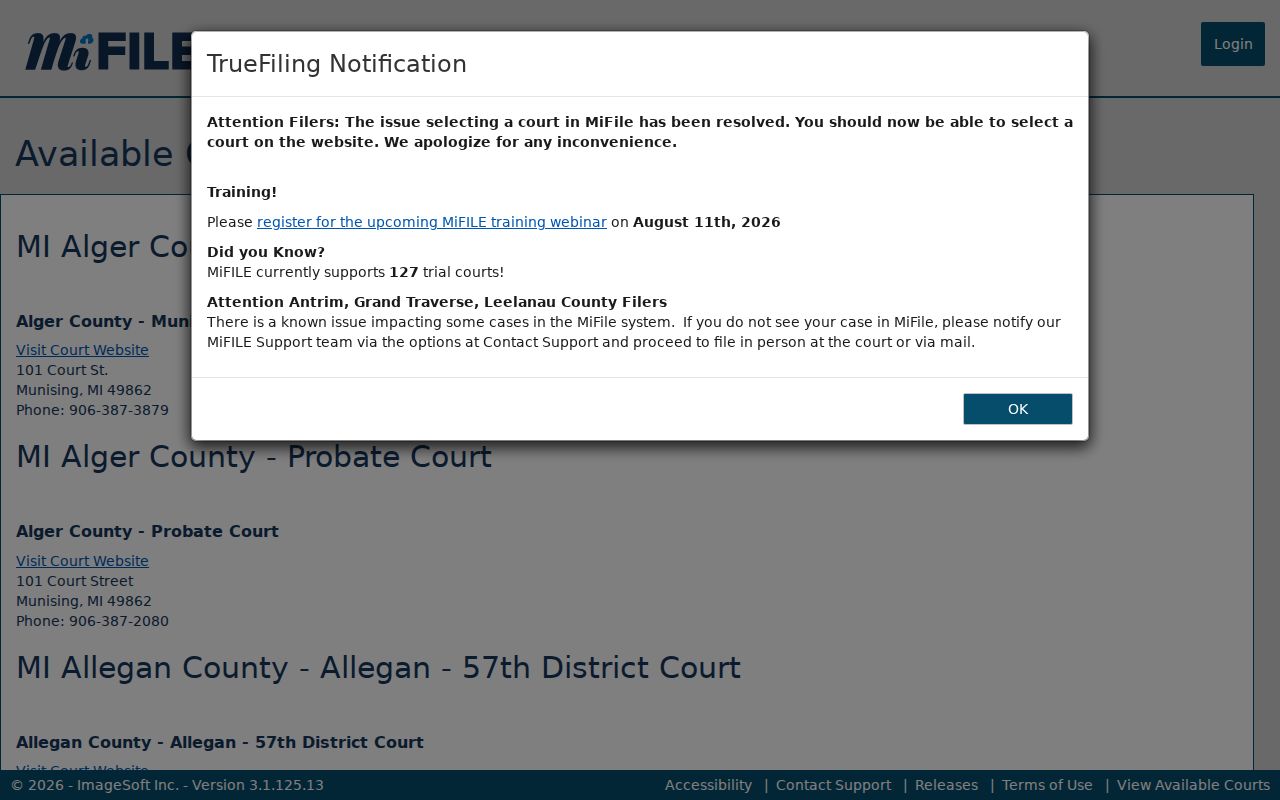
MiFILE's court list helps when you need to find an e-filing court. Just don't confuse it with the free public case-search tool; MiFILE and TrueFiling serve a different job.
Searching Antrim Cases by Number
Searching by number is often the fastest route. The citation, summons, order, or filing in hand already carries it. MiCOURT's public screen breaks the number into Year, Number, and Type. Each segment should be copied exactly from the paper. Antrim County does not publish a dependable local suffix, so don't guess at a pattern. Read every entry as Year / Number / Type, keeping any type or suffix just as printed.
If the full formatted number flops, split it. Drop the year, number, and type into their separate fields. Then check the returned court, case type, filing date, and caption. Remember that a case number proves a proceeding exists, not that everything is public. A calendar row or history detail can stay restricted or incomplete. A paper notice sometimes reflects a docket event before it shows in any public display.
Antrim Case Search Filters
Filters can narrow an Antrim County court docket search. But a category being listed is not a promise that every case inside it is open to the public. The documented categories cover civil, criminal, domestic, probate, traffic, non-traffic, adoption, appeals, and juvenile. Even so, the public portal expressly leaves several protected case types out. Case-type codes and subcategories also shift from court to court. Pick the court first. Then use a filter to trim a result list that already fits.
The MiCOURT API material goes further than the public screen ever will. It describes date filters, sorting, and data expansions. These include judge, charges, next hearing, participants, petitions, prosecutor, and referee for permitted access. Those technical fields exist only where access is allowed. A public result still reads best as an informational case history. It is not a full electronic court file.
For the record, the MiCOURT v4 case-search reference lays out every supported public-search concept in detail.
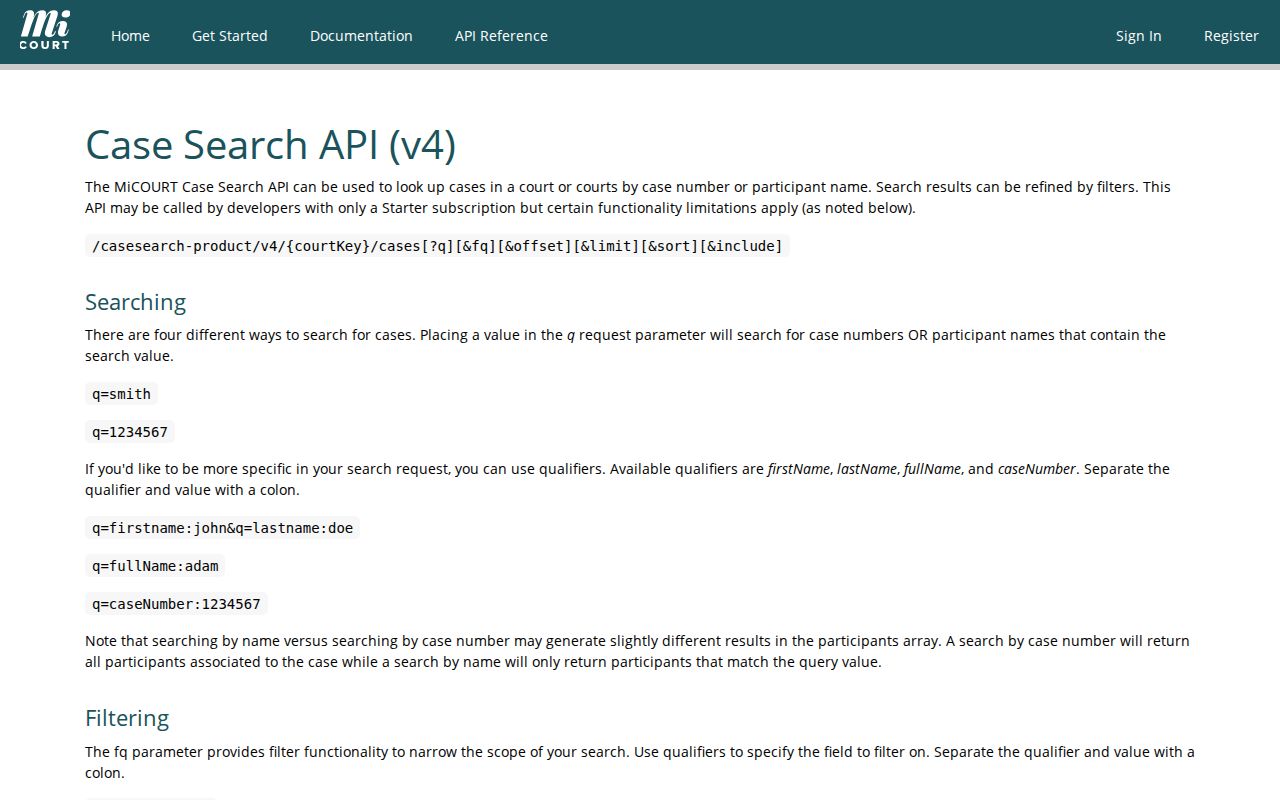
Filter fields: the reference separates search inputs and permitted data functions from what an ordinary public result actually displays.
What an Antrim Case Search Returns
A match can come back with plenty. Expect a case number, case status, and filing or creation date. You also get the court, its location, the case category, a caption or participant names, and a public register of events. Where access allows, the model also supports charges or petitions, a next hearing, disposition, and financial information. Some personal identifying information may be masked. That is enough to identify a file. It tracks public docket events in the Antrim County court docket. It is not enough to claim every document or fact is on display.
| Case Number | Year / Number / Type as entered or returned by the court system. |
|---|---|
| Style / parties | Caption or participant information if the public record exposes it. |
| Case type | Criminal, civil, traffic, domestic, probate, or another court-defined category. |
| Filed date | Creation or filing date used to distinguish similar matters. |
| Status and history | Open, closed, disposed, and dated entries such as filings, hearings, orders, and judgments. |
| Next hearing | A future setting if publicly exposed, subject to confirmation with the current calendar or court. |
Need a current hearing? An Antrim case search is the starting point, nothing more. Confirm the date, time, and room through the court calendar and the latest notice.
Antrim Case Search Result Limits
MiCOURT comes with fine print. The public case search is informational only, and it never replaces the official court docket. Its terms also bar bulk downloads, scraping, automated requests, and attempts to bypass rate limits. So pace yourself when running an Antrim County docket search there. A few quirks narrow results even further. Some courts use a seven-year filter. The public view then reaches only criminal case numbers and conviction information from within seven years of sentencing. And a 2026 notice reports that the 86th District Court has paused criminal extraction to its public website. The pause holds while records are reconciled.
What does that mean for you? A missing result proves nothing about the Antrim case itself. It is a prompt to check the court, the name spelling, the year, and the case type. When a case should exist but stays offline, try the District Court office. You can also try the County Clerk public terminal, or a records request. The MiCOURT search terms and notices spell out these informational and use restrictions straight from the source.
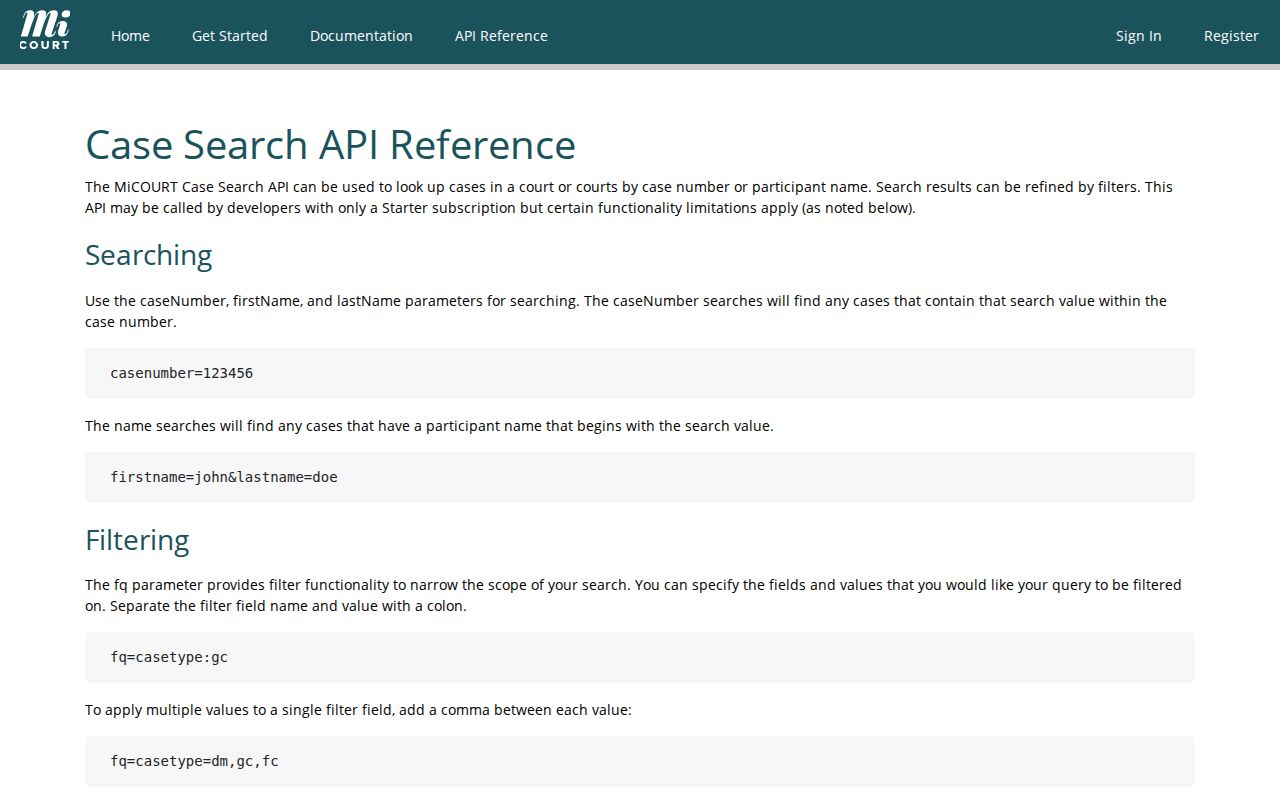
Search screens can work with a name or a case number. Even so, the official Antrim County court record stays with the court of record itself.
Antrim Statewide and County Case Search
MiCOURT serves as the statewide public layer for Antrim County case search. Search by name or case number across the public categories it offers. You can then pull the public case history for a chosen court. Antrim also runs court-specific channels of its own. The 86th Court Display shows dates and settings. That helps with court dates rather than deep case detail. Treat the Circuit Court records-search link as a lead only. It has not worked reliably as a public tool. When it fails, the County Clerk counter and public terminal stand in for Circuit Court files.
| Search channel | Best use | Important limit |
|---|---|---|
| MiCOURT Case Search | Public name or case-number case history | Informational results and protected category exclusions |
| 86th Court Display | District Court calendar setting | Not a full case-history search |
| County Clerk terminal/counter | 13th Circuit file and records access | Clerk process needed for documents or certification |
| MiFILE / TrueFiling | Registered 13th Circuit filing and e-service | Not a general public docket viewer |
Want a copy of a public file? Hand the clerk the case number from your search result. Say whether you need a plain copy or a certified one, and the clerk takes it from there.
Antrim Case Search Restricted Records
Not every Antrim County case search returns everything. Adoption files, juvenile and child-protective matters, juvenile guardianships, mental illness cases, name changes, parental waivers, PPOs, extreme-risk protection orders, and wills are among the categories left out of public results. A restricted case might not appear at all. It might show only a limited status. Or it might appear with personal details masked. Under MCL 712A.28, juvenile records stay closed to the general public. Access requires a legitimate interest or a statutory exception.
Court records here follow Michigan Court Rule 8.119. They are not governed by the Michigan Freedom of Information Act. That rule drives how the 86th District Court handles its File Review/Copy Request options. Those options cover party access, redacted copies for nonparties, copies with a party's written consent and identification, and authorized access. Depending on your role, expect to show photo identification, supply consent, or obtain a court order. One caution applies. Asking a clerk for a protected file does not unseal it. A docket search can remain limited even after an in-person request.
MCR 8.119 lays out the full framework for court-record access. It also covers what counts as public case-history information.
Antrim Case Search Clerk Fallback
When a public docket search misses a case you know exists, recheck the court first. Check the spelling, the case type, and the year too. Then go to the court that owns the file. The County Clerk public terminal and counter serve as the Circuit Court fallback in Antrim County. The 86th District office, its terminal, and the File Review/Copy Request handle District Court records. Probate and Family staff keep their own separate stream. Those offline paths matter when the public portal comes up short.
For an active District Court file, the request form allows a 48-hour turnaround. Storage files may take up to ten business days. Give the court the case number or the party names. Need a transcript? That request goes to the court reporter, not the Clerk.
Antrim Case Search Next Hearing
A next-hearing field is a helpful clue in an Antrim County docket search. Treat it as a lead, not a final answer. The field reflects a future setting only when the court makes that data public. Cross-check it against the newest notice. Check later entries in the case history, and the right 86th Court Display. A stale date can linger in the register after a continuance or rescheduling.
Confirm with the case number from your result. Check the date, time, room, and type of setting. If the calendar leaves the case out, call the court or ask at the counter. Staff can confirm the current setting by phone or in person. Still, only a fresh notice or a new order changes the official case record.