
How to Search Antrim Criminal Dockets
Start an Antrim County criminal docket search with MiCOURT Case Search. Pick the right court before trusting any match. Searching by name? You must supply a Last Name or Business. You can narrow things with a first name, a middle name, or a birth year. A number search works differently. It asks for Year, Number, and Type in separate fields. Treat those fields with care. Antrim criminal case numbers do not follow one suffix pattern that fits every case.
- Open MiCOURT, accept its terms, and select the court that issued the case.
- Use the defendant’s last name with a first name when known, or enter the notice’s year, number, and type.
- Choose the criminal category only after confirming the court, then compare the returned court, status, and participant details.
- Open the available case history and note later entries, the next hearing, and the disposition field.
- For a document or certified copy, contact the clerk that holds the case file rather than treating the web result as the official record.
For a current court date, check the case history along with the district court display. The 86th District Court calendar page connects to the Antrim judge and pretrial displays. If a felony file or a circuit result will not load, the circuit clerk is the fallback.
Antrim Criminal Docket Court Split
Criminal cases in Antrim County follow a split path. Felony prosecutions and felony sentencing sit in the 13th Circuit Court. The Antrim County Clerk serves as the criminal-division clerk there. The 86th District Court takes the rest. That means misdemeanors punishable by up to one year, plus local ordinance violations, arraignments, bail, probable-cause conferences, preliminary examinations, and civil infractions. So a felony docket can show early District Court entries and later Circuit Court entries. That is a transfer of court responsibility, not two separate cases.
Michigan's District Court jurisdiction statutes assign the misdemeanor work and the early felony steps to District Court. A docket search may return several cases with similar names. Go by the court listed on the most recent notice. Choosing the right court usually beats adding more personal data to a broad name search.
Note: Antrim County shares the 13th Circuit and the 86th District with neighboring counties. An administrative page may mention Traverse City even when your Antrim matter is local.
What an Antrim Criminal Docket Shows
A public case history is a dated register of actions, not a pledge that every filed paper appears online. The MiCOURT model opens the door to case identity, court location, filing date, status, participant information, charges, register entries, a next hearing, and a disposition when the court turns those fields on. Bond amounts, prosecutor fields, and local docket abbreviations vary from court to court in Michigan. Do not assume another county's format for an Antrim County docket.
| Case number | Search by Year / Number / Type; keep the notice’s type or suffix exactly because a universal Antrim format was not verified. |
|---|---|
| Charge and level | Offense and misdemeanor or felony level when publicly displayed; an attempted charge may carry an “A” marker. |
| Case history | Dated filing, hearing, plea, order, disposition, and sentence events that form the register of actions. |
| Next hearing | A future setting when exposed, to be checked against the current court display or notice. |
| Status and disposition | Open, closed, dismissed, conviction, acquittal, delayed outcome, or other recorded result. Read the order for legal effect. |
Antrim Criminal Charge-Level Warning
MiCOURT flags one trap worth knowing before you read an Antrim criminal docket. Under MCL 750.92, an attempted offense that the statute treats as a misdemeanor can still show a public Charge Level of FELONY for a while. The system tags attempted, conspired, or solicited charges with an “A.” That public display is no substitute for the charging document or the court's ruling.
Be careful here when you compare a charge block against a plea or the final sentence. The label alone does not settle what happened in any particular Antrim criminal docket. Check the charge, any amendment, and the final outcome in the court file. Or ask the clerk to pull it. Michigan's public MiCOURT criminal-search notice spells out both the public search context and its limits.
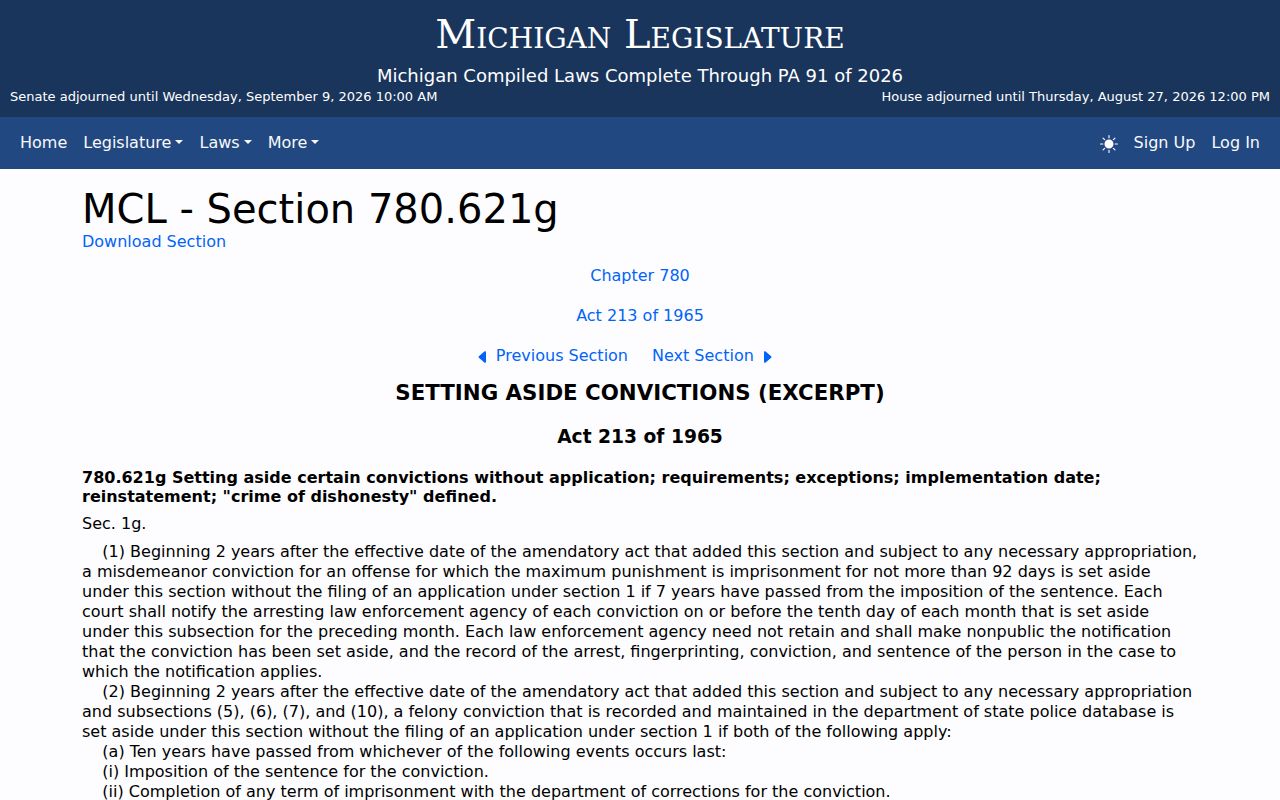
The official statute source is the right place to check the governing set-aside provision. It will not tell you the current status of an individual case. For that, use the court docket itself or the clerk.
Stages on an Antrim Criminal Docket
Read the case history in order. Initiation entries may name a complaint, a warrant, or a charge. Arraignment can show a plea, bond, and the next court date. A felony may then move through a probable-cause conference or preliminary examination in District Court. Circuit Court takes over after that. The 86th calendar publicly labels an Antrim pretrial display. Circuit scheduling runs through court administration.
Docket flow: Charge Filed › Arraignment › Preliminary Stage › Pretrial › Plea or Trial › Disposition › Sentencing
Later docket entries might list a guilty plea, a no-contest plea, a dismissal, an acquittal, a delayed judgment, a sentence, bond action, or an appeal reference. A disposition records the outcome. It does not spell out sentence terms or the reason for a dismissal, so the signed order still matters.
Antrim Criminal Docket Missing Results
A blank spot in an Antrim County criminal docket search does not always mean the case is gone. The 86th District Court has paused criminal-case extraction to its public website while records are reconciled. A missing Antrim criminal docket result can simply reflect that access gap. Two more limits apply. MiCOURT notes that some courts apply a seven-year criminal-sentence filter. Protected case types sit outside the ordinary public search.
Need a misdemeanor or traffic answer? Call the 86th Antrim office at 231-533-6441, or visit the counter and public terminal. For a felony, try the County Clerk public terminal. Or call the Antrim County Clerk at 231-533-6353. Older District files go through the 86th File Review/Copy Request. Active files are listed at a 48-hour turnaround. Storage files run up to ten business days.
The current criminal-access warning appears on the 86th District Court's official division page.
That same division page explains one more thing: the District Court office is the local contact for misdemeanor and traffic case questions in Antrim County.
Which Court Holds Antrim Criminal Dockets
Two Antrim County courts split the criminal work. Felonies live on the 13th Circuit Court docket. The Antrim County Clerk keeps the files and pleadings. Misdemeanors, ordinance cases, traffic matters, and felonies in their early stages belong to the 86th District Court Criminal/Traffic division. That division also schedules hearings. It opens and closes cases, talks with the jail, handles bonds, and reports outcomes to state agencies.
MiFILE does not replace either channel. It is an e-filing and e-service tool for registered filers in the 13th Circuit Court. A receipt or service trail helps a lawyer. It is not a public criminal case-history search. For a document behind a docket entry, use the clerk or the court record process. The MiFILE available-courts list shows Antrim's 13th Circuit Court among the e-filing courts.
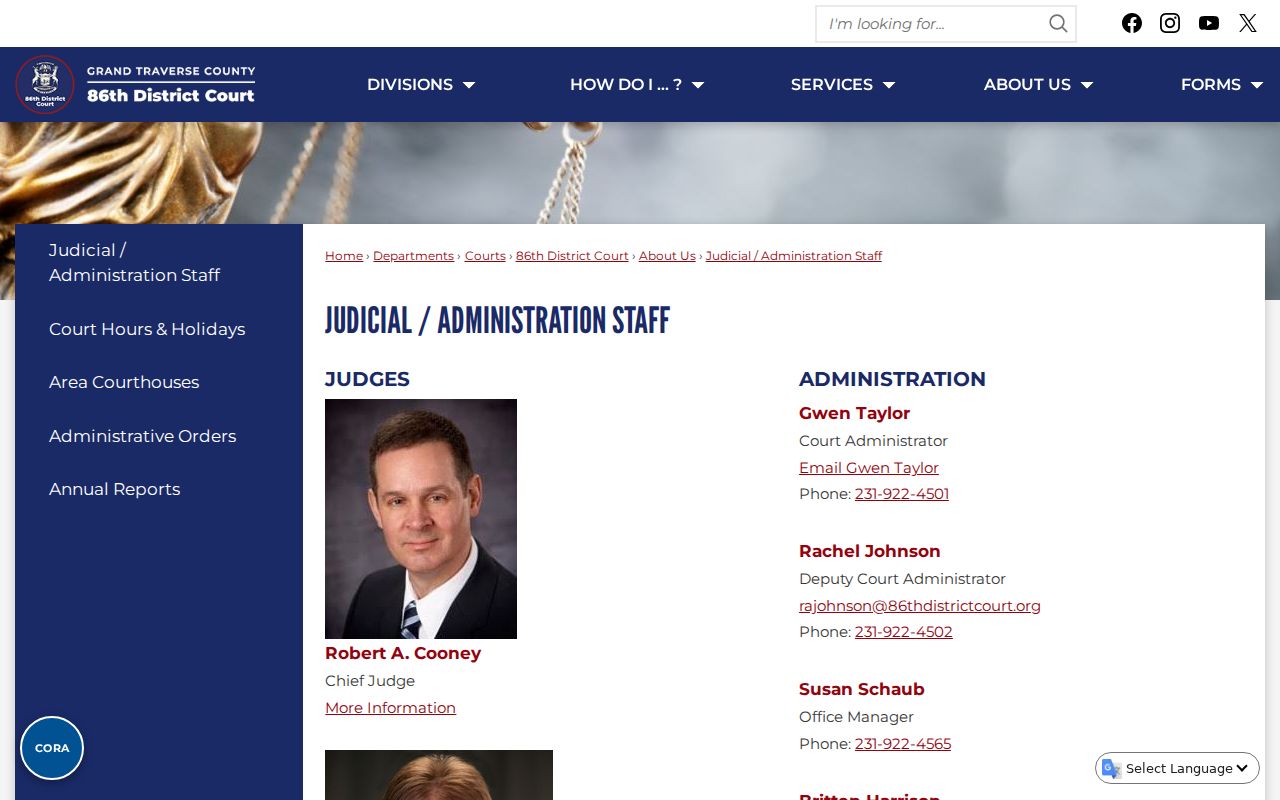
Administrative staff at the court can route a scheduling question. The clerk keeps the official Circuit Court file.
Antrim Criminal Docket Specialty Courts
The shared 86th District Court lists four specialty programs. These are Sobriety Court, Drug Court, Community Outreach Court, and the Eviction Diversion Program. Each one is a program, not a separate court. A participant's criminal case keeps its own docket. Its own access rules apply. Membership in a program does not create some new public database of names.
So do not guess at program status from a name search. Look for the court and the case number. Check any later orders too. Treatment material and restricted records may stay out of public view. The clerk can explain the access procedure. Only a court order or a governing rule can lift a restriction. The official specialty-courts page lists the programs offered through the shared court system.
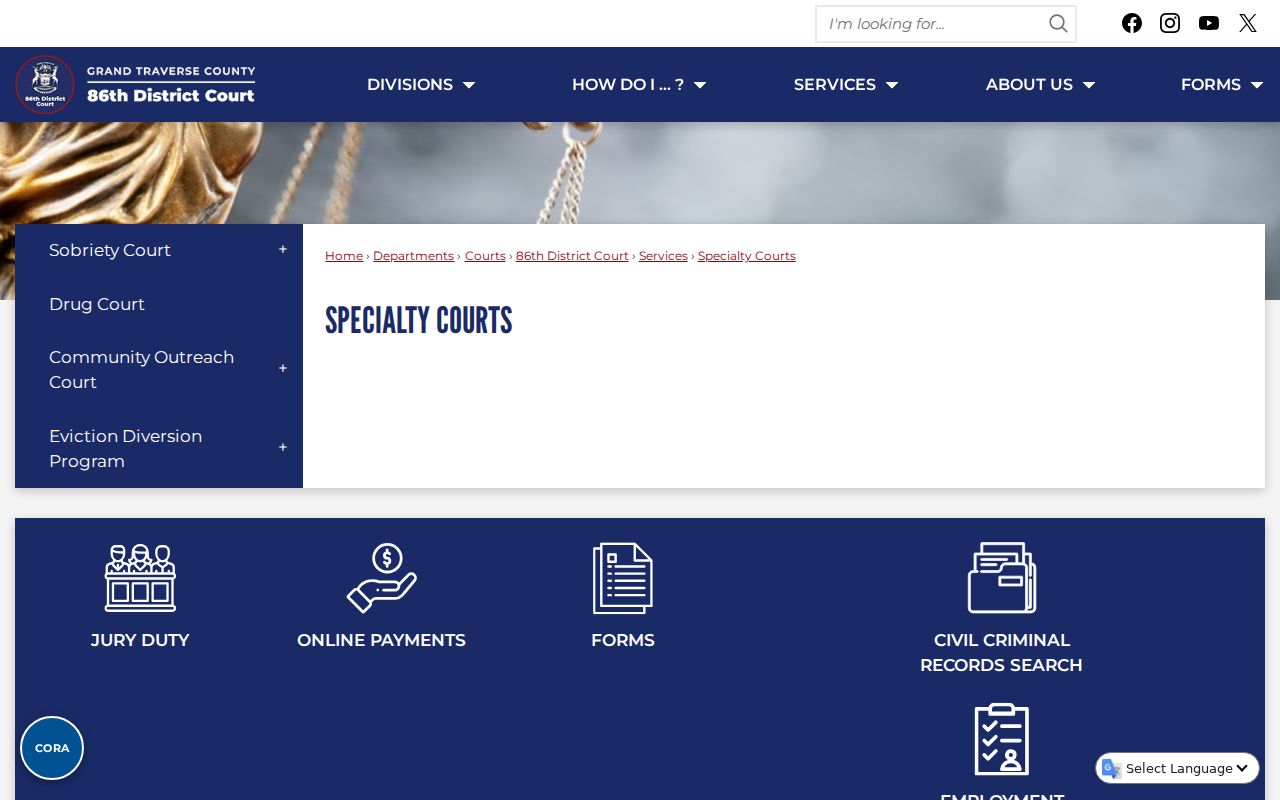
The program list helps with routing only. It names no private participants and settles nothing about a criminal docket's legal status.
Public Access to Antrim Criminal Dockets
Court records follow the court-record rules, not Michigan FOIA. MiCOURT may publish public case-history information, but the court must supply its own way to reach other electronic documents on request. Treat the online case history as informational. It is not the official record. Protected details, or even whole case categories, may be missing from it.
Key Rules:
MCR 8.119(H) permits public case-history information online while controlling access to court records and electronic documents.
MCR 1.109(D)(9) guidance protects personal identifying information such as birth dates and financial account numbers.
MCL 712A.28 limits general public access to juvenile records.
Some matters will not appear in full. Sealed, juvenile, adoption, mental-health, PPO, and set-aside records can be absent. They can also be restricted or redacted. A party or an authorized person may need ID, written consent, or a court order. The 86th request form covers all these paths. It spells out party copies, redacted nonparty copies, consent with party identification, and court-authorized individuals. Michigan Court Rules Chapter 8 is the controlling public-access reference.
Ask the court for the case file through its own record-request procedure. County FOIA covers county administrative records, not judicial case records.
Antrim Criminal Docket Dispositions
Outcome and sentence are two different docket facts. A guilty plea, no-contest plea, conviction, dismissal, acquittal, delayed judgment, or set-aside entry records what happened. A later sentence order sets the real consequences: probation, custody, costs, conditions. Read both before describing a case.
Labels leave questions open. A "dismissed" entry never says why, or whether another charge went on. A set-aside record can be nonpublic under Michigan law. Bond forfeitures and default-style entries are court actions too, with the details sitting in the order. The Antrim criminal docket gives the case history. The clerk-held record holds the authoritative document whenever access is allowed.