
How to Search Antrim Civil Dockets
Begin with MiCOURT Case Search. Pick the court first. From there, use the participant panel or the separate case-number panel. The name panel asks for a Last Name or Business and can take an optional first name, middle name, and birth year. The number panel splits things into Case Year, Number, and Type. Choose the civil category only after you have identified the court. What the public gets is an index and case history when available, not a promise that every pleading is free to download.
- Select the court identified by the summons, notice, or case number.
- Search with the party’s full last name and first name, or use Year, Number, and Type exactly as shown on the filing.
- Compare the caption, filing date, status, and court before opening a result.
- Read the chronological entries and next hearing field, then verify a current setting with the court.
- Request the complaint, signed order, or certified copy from the responsible clerk if the online entry does not supply it.
The 86th "Court Cases" link takes you back to MiCOURT. The circuit records-search link does not work. For 13th Circuit civil files, the fallback is the County Clerk counter and its public terminal.
Antrim Civil Docket Jurisdiction Line
Money decides where an Antrim County civil case lives. The 13th Circuit Court takes civil lawsuits over $25,000. It also hears appeals from District Court. Below that line, the 86th District Court hears general civil cases up to $25,000. It adds small claims and summary proceedings too. Its civil division handles the filings, hearings, writs, garnishments, and fees for those matters. Circuit Court civil files sit with the Antrim County Clerk instead.
MCL 600.8301 and MCL 600.8311 set out that division of work between the courts. A case filed in the wrong court will not surface. Changing a search filter will not fix that. So read the amount, the case type, and the court named on the paperwork first. Do that before any docket search begins.
Source: the 86th District Court civil-fee page reflects the court’s claim tiers.
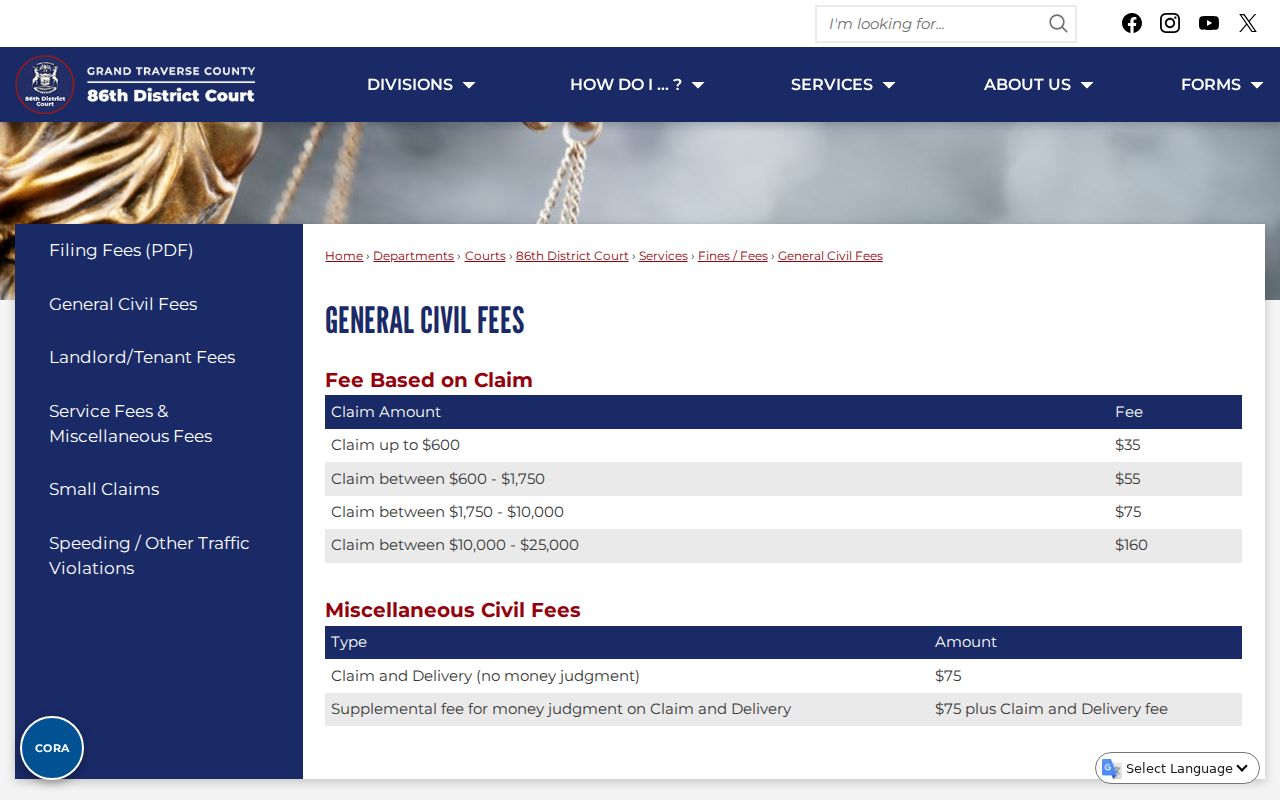
That fee schedule confirms the District Court's civil range. It says nothing about the outcome or availability of any one case.
What an Antrim Civil Docket Shows
Think of an Antrim civil docket as the court's chronological register. The public view can list the case number, filing or creation date, court, location, status, caption or parties, case category, judge, next hearing, and later case-history entries. A disposition or financial information may appear when public. Remember what a docket event is. It shows that an action occurred, nothing more. It cannot replace the complaint, answer, motion, judgment, writ, or signed order itself.
| Case identity | Year, number, type, filing date, court, and case status. |
|---|---|
| Caption and parties | The case style and participant roles shown in the public result. |
| Case history | Dated filing, service, motion, hearing, order, judgment, and post-judgment entries. |
| Next hearing | A future date when exposed, to be confirmed from the current display or notice. |
| Disposition | Dismissal, judgment, default judgment, agreed judgment, or another recorded closing result. |
Antrim Civil Docket Documents
A case history and the papers behind it answer different questions. A complaint states a claim. An answer replies to it. A motion asks the court to act. A signed order gives the court's operative direction, and a judgment establishes the result. The docket may show the date each item was filed or entered. It can do so without putting its text in the public result. For District Court documents, use the File Review/Copy Request. Bring a case number or party names. The form includes redaction and identification options. For Circuit Court material, contact the Antrim County Clerk for the current records procedure. A plain copy and a certified copy are different products, so state your purpose when you request. Note: a court docket supports a case lookup. It does not prove the contents of a document you have not obtained and read.
Types of Antrim Civil Docket Cases
The District Court civil division handles more than one kind of case. A claim amount, a small-claims designation, or a summary-proceeding label changes both the process and the docket entries you should expect. Eviction cases may show a possession request, service, hearing, judgment, and later money damages. A standard civil case looks different. Expect motions, discovery, settlement activity, trial preparation, and a judgment.
| Civil docket type | Antrim court path | Useful entry to watch |
|---|---|---|
| Civil claim up to $25,000 | 86th District Court | Complaint, service, motion, hearing, judgment |
| Small claim up to $7,000 | 86th District Court small-claims division | Claim, hearing, judgment, satisfaction |
| Summary proceeding | 86th District Court | Possession request, summons, hearing, damages |
| Claim over $25,000 or appeal | 13th Circuit Court | Filing, motion, scheduling, order, appeal entry |
Antrim Civil Docket Small Claims
Small claims are not city-court files. They are District Court civil dockets, with a published maximum claim of $7,000. The local fee schedule sets $30 for a claim up to $600, $50 from $600 to $1,750, and $70 over $1,750. Those figures are filing fees only. Service, motions, or judgment enforcement can add costs later. Search a small claim the same way as any District Court civil matter, then follow the docket to the hearing or judgment. If a document is missing, ask the court for it. After the initial decision, the docket may later reflect satisfaction, a garnishment, or another post-judgment step. Source: the official small-claims page gives the maximum claim and filing-fee tiers.
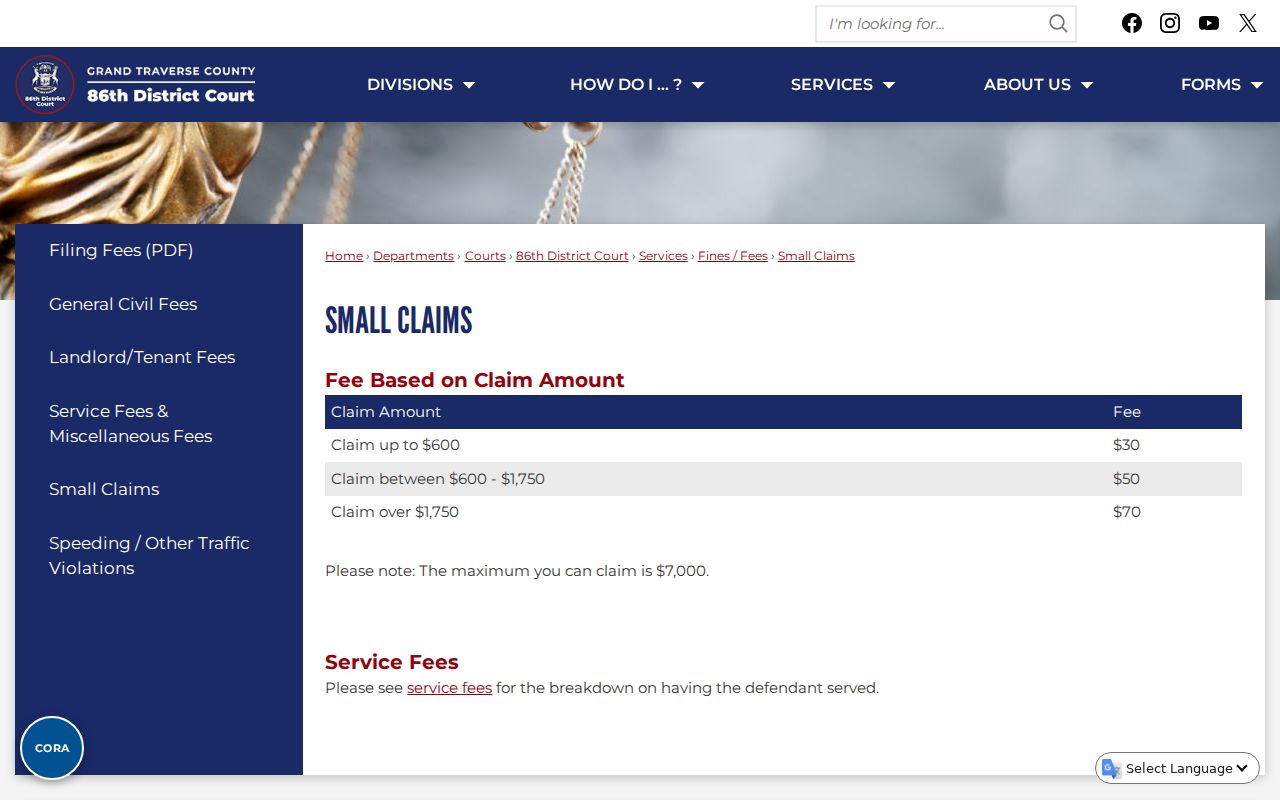
The fee page is a handy way to confirm a case type. To follow a particular small-claims case, though, the case history is still the place to look.
Settings on Antrim Civil Dockets
An Antrim County civil docket tells a story in stages. A complaint comes first, then service, an answer, motions and orders, case management, and finally a hearing or trial. Read the entries with care. A service entry shows that service was recorded, not that its facts check out. A motion entry is only a request until a signed order appears. The next hearing field can point to a live setting, yet a later adjournment, notice, or order can change everything.
Where you turn for a date depends on the court. District Court settings show up on the 86th Court Display or through the Antrim office. Circuit Court works differently. Court administration schedules judges' and referees' hearings there, while the County Clerk keeps the case file itself, so a date question and a copy request can land at two different counters. The Antrim court calendar walks through the display and how to confirm a setting.
Antrim Civil Docket Fee References
The District Court publishes civil fees that help you spot a filing category. Confirm the amount with the court before you file. A general filing-fee PDF may not load, so the court's live civil and landlord-tenant pages are the better source for figures that are actually available.
| District Court item | Published amount |
|---|---|
| Claim up to $600 | $35 |
| Claim $1,750 to $10,000 | $75 |
| Claim $10,000 to $25,000 | $160 |
| Possession-only rental eviction | $55 |
| Motion, second summons, or alternate service | $20 |
| Plain / certified / name-search copy | $2 / $10 / $10 |
Source: the official landlord-tenant fee page supplies the local summary-proceeding references.
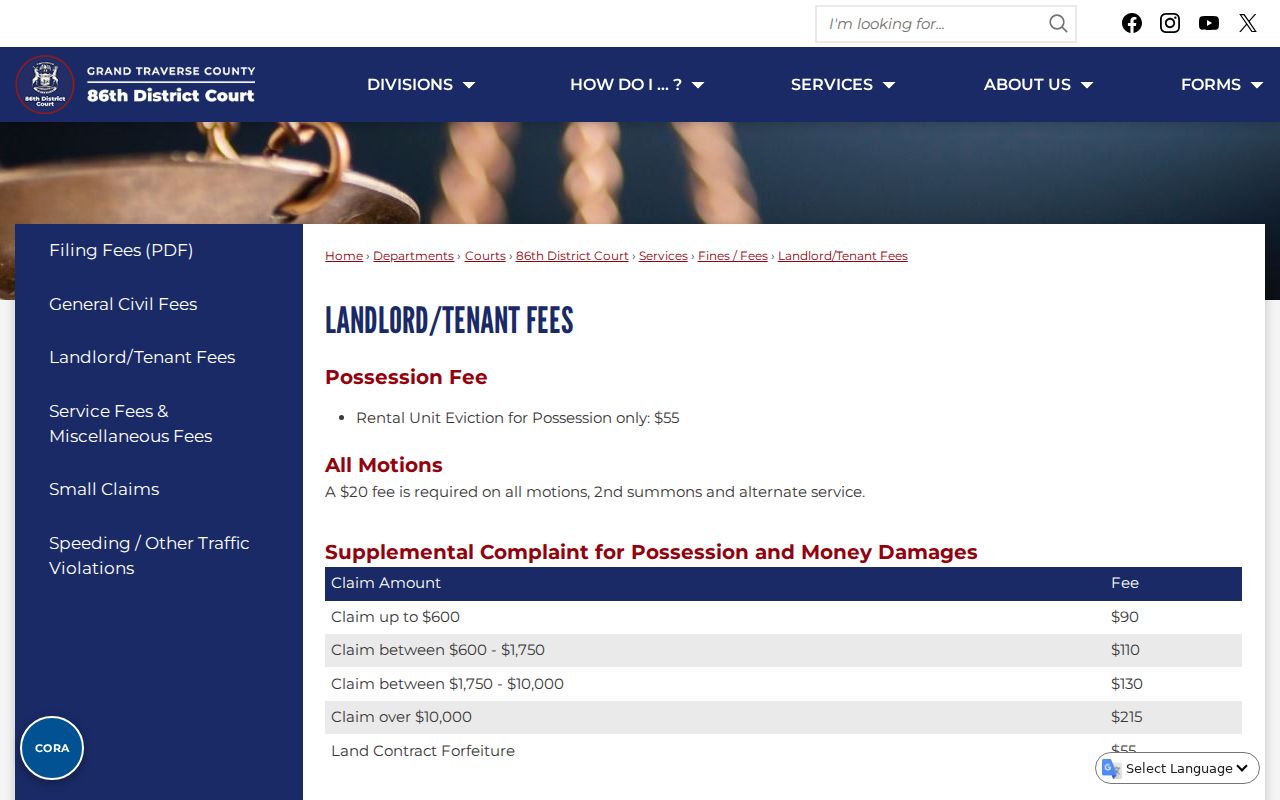
The fee table separates possession, money damages, motions, and service-related events, each of which can generate a different entry on an Antrim County civil docket.
Public Access to Antrim Civil Dockets
Access to Michigan court records is not the same as a county Michigan Freedom of Information Act request. Court rules govern the judicial branch on its own terms. MiCOURT can display public case-history information. But other electronic documents require court-provided access when someone asks for them. What you see on the web stays informational. It may lack documents, protected details, or entire case types.
For a stored 86th District file, the request form allows up to ten business days. An active file is listed at 48 hours. You will likely need a case number or party names. Personal information may be redacted. Ask expressly if you want a certified copy. The clerk, not a public case-history printout, authenticates the certified record.
Under MCR 8.119, that rule governs public access to court records. It also covers the availability of court-managed electronic documents.
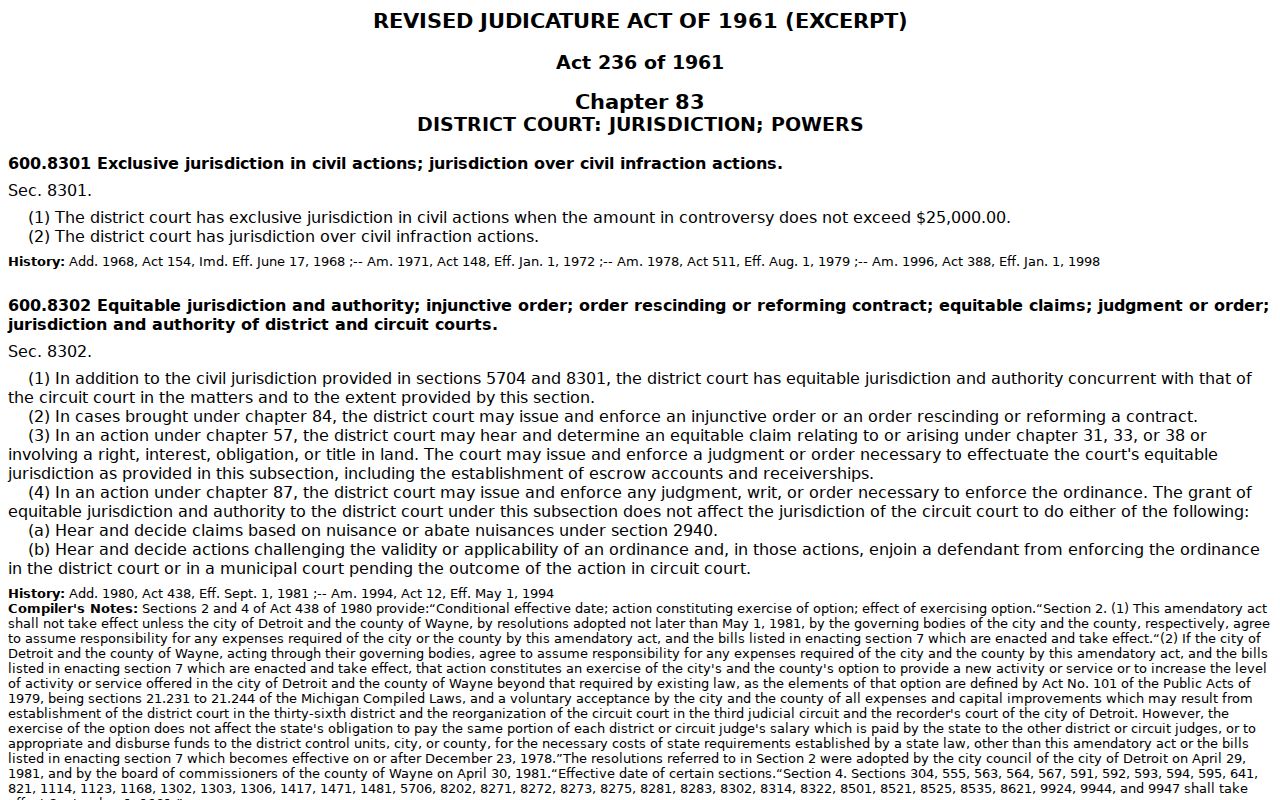
Protected records can carry restrictions. No public docket result overrides a court rule or order that limits access.
Antrim Civil Docket Circuit Fallback
The County Clerk and 13th Circuit pages list a circuit civil search link. Treat it as a lead. It is not proof that a working public interface is waiting there. A known Circuit Court civil case may fail to appear in MiCOURT, or the linked search may not load. In that case, go to the County Clerk public terminal or counter with the case number or party names in hand.
The clerk maintains the 13th Circuit civil files and pleadings. Want a document? Ask about the current copy procedure, and ask whether a certified copy makes sense. MiFILE / TrueFiling serves registered filing and e-service. It can trace a filer's transmission trail. But it is not the public civil docket, and it never replaces the clerk's channel for record access.