
How to Search the Ellsworth Court Docket
Ellsworth's village government runs no separate judicial search, court calendar, judge listing, or ticket-payment portal. Check the court line on your citation for any Ellsworth ticket or ordinance matter. The county court map sends these cases to one place. Local ordinance violations, traffic, civil infractions, and related district cases belong to the 86th District Court Criminal/Traffic division. For a public docket search, open MiCOURT Case Search. Then use the court selector or the name and case-number fields. A released Ellsworth case history can show the court and case number. It also lists status and a next hearing. It is still not the original court file.
- Keep the Ellsworth citation or notice and copy its court name, ticket number, case number, and appearance information.
- Search MiCOURT by last name and optional first name, or use Case Year, Case Number, and Case Type.
- For an eligible 86th District ticket, use the Antrim WebTeCS portal with the ticket number or the name-and-date-of-birth lookup fields.
- Use the Antrim judge or pretrial Court Display link to compare the Ellsworth case history with a date-based setting view.
- Call the Antrim 86th District Court at 231-533-6441 for a missing, new, nonpublic, or unclear Ellsworth case.
Note: Search an Ellsworth court query with the case identifier and the named court, not just the village name or an ordinance topic.
Ellsworth Court Context in a Small Village
Ellsworth is the smallest of Antrim County's five profiled incorporated villages. The 2020 Census incorporated-place table counts 367 residents. Small size does not shrink the county court structure, though. The village publishes ordinances, FOIA documents, water-quality reports, public-participation material, and financial information. Those Ellsworth government records have real value. None of them proves a court hearing. It does not prove a case outcome or a judicial case history either. The official Village of Ellsworth information page shows what the village itself posts.
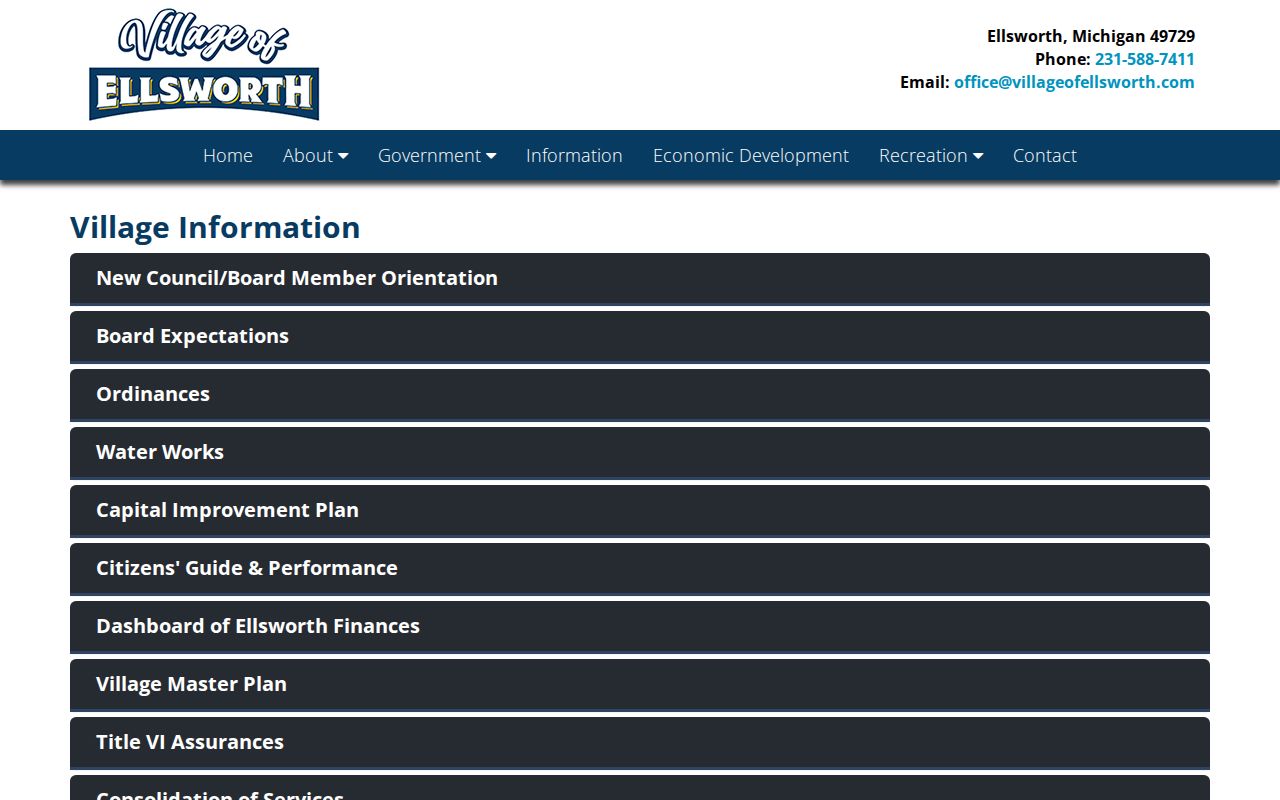
The village page is a handy reminder. Ellsworth government records and an Ellsworth court record pass through separate offices.
The Ellsworth Municipal Court
Ellsworth has no separate municipal court. The official sources name none. The village publishes no docket, court calendar, judge listing, citation lookup, or payment page. A village ordinance tells you what local rule applies. The court named on the citation controls the pending case, setting, response, and result. For ordinary village ordinance and traffic questions, the practical Ellsworth route is the 86th District Court when the ticket names that court. That court runs criminal/traffic, civil, and probation divisions. Other Ellsworth cases can belong to the Circuit Court or the Probate and Family Division, depending on case type. The village office is no stand-in for a court clerk on a docket entry or filed court document.
Ellsworth court clarification: Village ordinances and village FOIA records are local-government resources. Court settings and case files remain with the court that has jurisdiction.
Ellsworth FOIA Records Versus Court Records
Ellsworth's village FOIA policy covers administrative records and ordinances held by village government. A ticket issued in Ellsworth does not change that. It is no channel for a court file. The Michigan judiciary is exempt from the FOIA framework. Judicial records are not FOIA records. Court records are public unless a law, court rule, or court order restricts access. That distinction tells an Ellsworth reader where to send a request. For an 86th District case, use the court office. The public-access terminal and the File Review/Copy Request process work too. For a Circuit file, go to the Antrim County Clerk. For a village ordinance, meeting material, or administrative record, use the Ellsworth village record path. The difference is custody, not importance. A register of actions is a chronological record of court events. A village record may document the local action that came first.
Ellsworth Court Dates and Settings
An Ellsworth court date can show up on the citation. It can appear in a case-history result. An order or an Antrim Court Display may list it too. The official 86th calendar links date-based Antrim judge, pretrial, and magistrate displays. Rows list Party Name, Time, Room, and Case Number. Match the case number against the latest Ellsworth case history. A calendar entry is only a scheduling view. Treat it as neither the complete file nor proof that an older date still stands.
| Date | The latest day listed on the Ellsworth citation, notice, case history, or court display. |
|---|---|
| Time | The time listed by the court, not a village office or meeting schedule. |
| Room | The room shown in an Antrim Court Display row when that field is public. |
| Court | The 86th District Court, 13th Circuit Court, or Probate/Family stream identified by the record. |
| Setting type | A current label such as arraignment, pretrial, hearing, trial, sentencing, or review. |
If an Ellsworth setting seems missing or moved, call the court and ask which date remains active.
Ellsworth Court Citation Counter Chain
An Ellsworth citation can name a court office well outside the village. Trust the court printed on the paper, not the local village counter. A case in the 86th District belongs to the Antrim office, reached at 231-533-6441. Circuit Court filings run through the Antrim County Clerk. The public line is 231-533-6353. Probate and protected-family matters go to the Probate and Family office. That number is 231-533-6681. Each office keeps a separate stream of court records. A call to the wrong one will not produce the Ellsworth docket you need.
When a fresh ticket fails to appear in the online payment lookup, the WebTeCS portal advises waiting until the next business day. Keep the citation handy. Phone the court before the date written on it. The portal also warns that late-day payments post the next business day. That timing changes the math. The paper ticket and a direct call to the court beat an empty web result.
Ellsworth Traffic Tickets
An Ellsworth ticket handled by the 86th District Court appears in MiCOURT as public case history. WebTeCS may offer an eligible ticket lookup plus payment. The paper itself still tells you the court name, the alleged violation, and the date your answer is due. Michigan procedure gives three ways to respond: admit, admit with explanation, or deny. A denial leads to an informal or formal hearing. A call to the court can get you a hearing date. Calling alone never counts as an appearance.
If the WebTeCS system will not take your payment, do not fall back on some unrelated bond-payment link. Nonpublic cases and civil fees sit outside that portal. Missing a deadline or a hearing invites default procedures. So dial 231-533-6441 before the date on the citation runs out. For the record, calendar, and copy channels, see Antrim County traffic court records.
Note: The village may be where the violation happened. The Ellsworth court record lives with the court named on the citation.
Ellsworth Court Venue by Case Type
Case type decides where an Ellsworth docket sits. The 86th District Court covers district criminal and traffic cases. It also handles ordinance violations, civil infractions, small claims, summary proceedings, and civil disputes up to $25,000. Small claims top out at a published maximum of $7,000. Anything above that threshold, along with felonies, moves to the 13th Circuit Court. Probate matters such as estates, trusts, guardianships, conservatorships, mental-health, adoption, and juvenile cases follow the Probate Court. That stream runs through the Family Division.
This venue map helps when an Ellsworth case search returns no District Court match. It cannot tell you the court from the topic alone, though. The filed case, citation, or notice supplies the controlling court name. A District Court appeal goes up to Circuit Court under Michigan rules. It never goes to any Ellsworth village body.
Where Ellsworth Cases End Up
Ellsworth has no village judicial docket that gathers every local case in one place. An ordinary ordinance or traffic matter usually lands in the 86th District Court. That is true when the citation names it. Felonies, larger civil claims, and other Circuit matters go to the 13th Circuit Court. Probate and protected-family cases follow a third record route. Keep in mind that an empty public result can point to a protected category. It may also reflect the 86th District Court's ongoing criminal-record reconciliation rather than a missing court file.
Docket flow: Ellsworth village citation or filing › 86th District Court or the court with jurisdiction › 13th Circuit Court for circuit matters and District Court appeals.
Once you know the right court and case number, the 86th District Court's request form sets the pace. It allows up to five specific requests per day. Files in active areas carry a 48-hour target. Records pulled from storage can take up to ten business days.
Ellsworth Court Records and Federal Dockets
Federal cases do not run through any Ellsworth village page, the 86th District Court, or the Antrim County Clerk's state-court files. They live in the federal court record system, built on PACER and CM/ECF, with appeals flowing to the United States Court of Appeals for the Sixth Circuit. Follow that route only when the case paper itself names a federal court. It never substitutes for the state-court path of an ordinary Ellsworth ticket or ordinance matter. The official PACER site explains how public access to federal court records works.
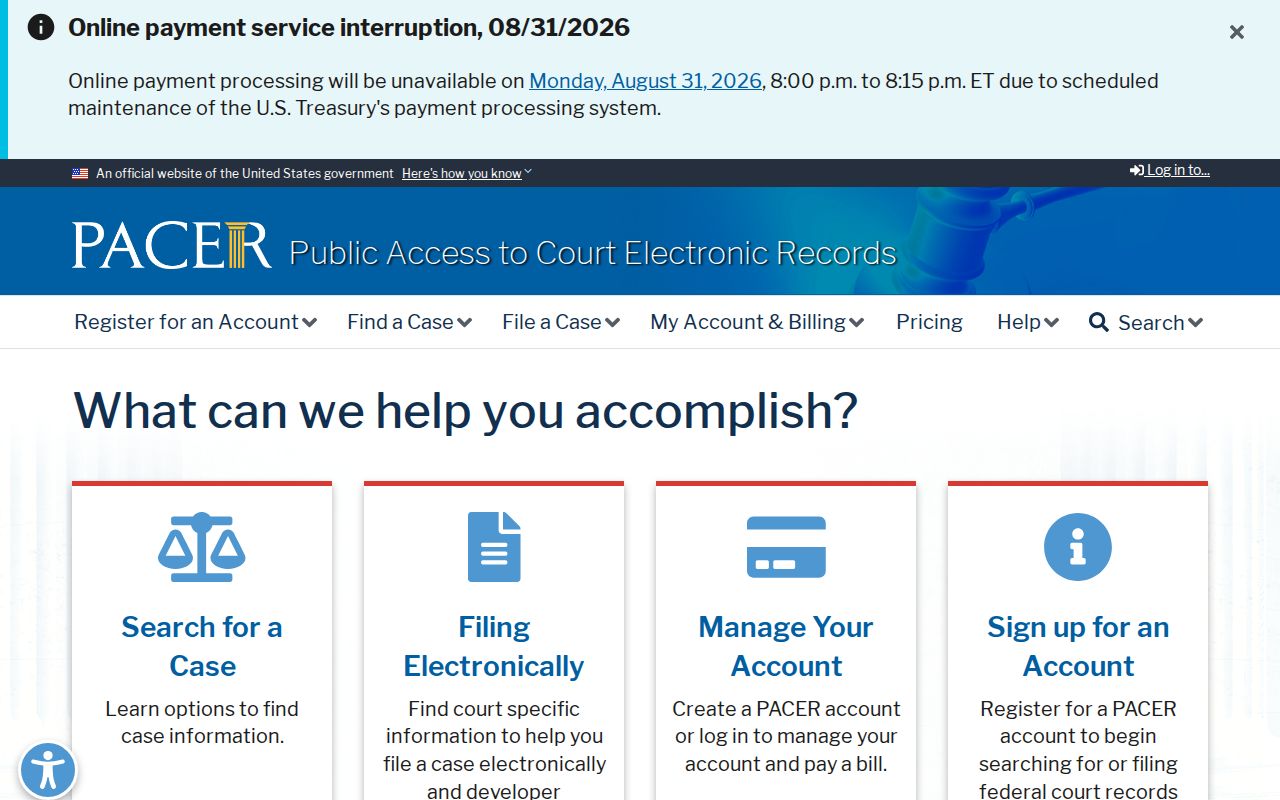
The federal system sits apart from the Ellsworth and Antrim County court path. So read the court caption first; it tells you which system to search. The official Sixth Circuit Court of Appeals site posts the court's calendars, rules, and case information.
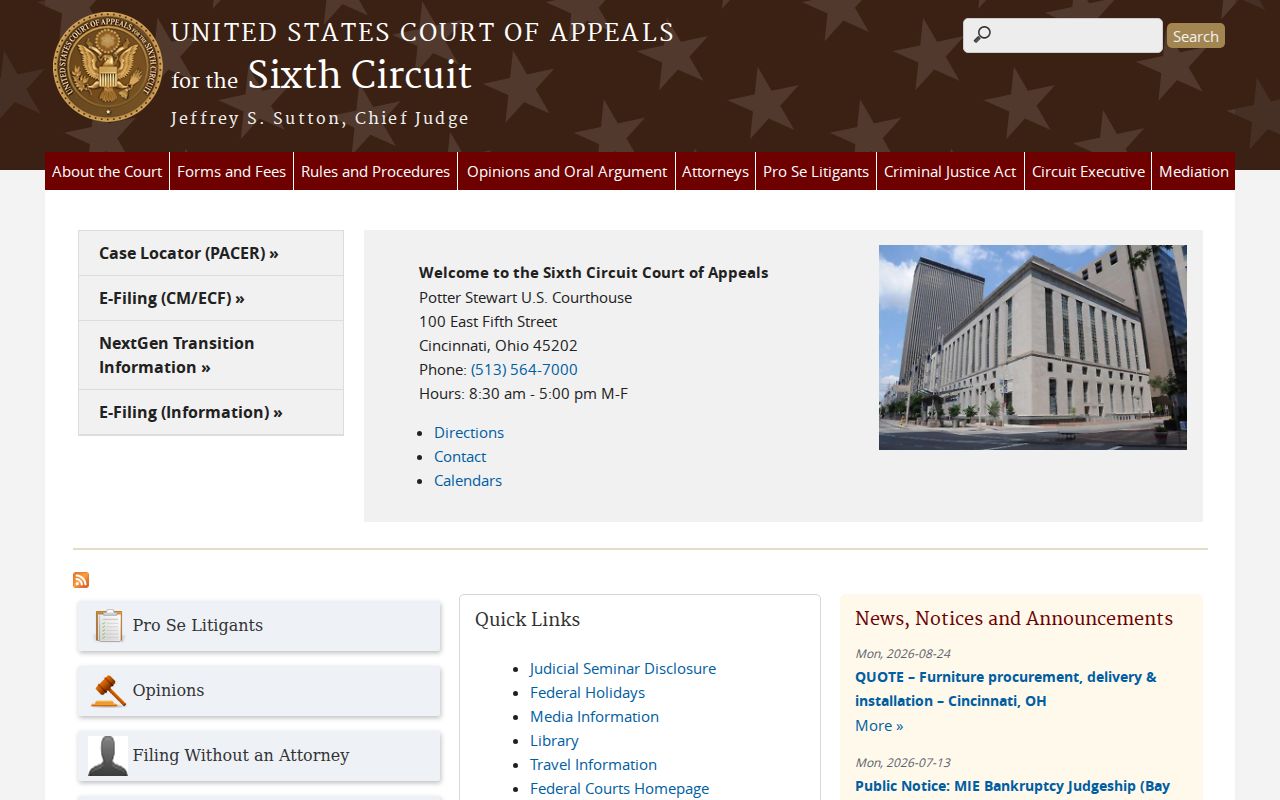
Neither federal source changes the ordinary Ellsworth state-court route. They simply keep a case that is already federal from being hunted in the wrong system.
Ellsworth Court Copy Requests
Send an Ellsworth court copy request to whichever court owns the case. For 86th District records, the public terminal is one documented channel. The File Review/Copy Request process is the other. Plain copies are published at $2 each. The form lists certified copies at $10 per case plus $2 per additional page. The fee page lists certified copies at $10, so confirm the current charge before you pay. Circuit Court copies come through the County Clerk. The Probate office handles its own record stream.
Federal cases work differently. PACER serves as the official electronic-access system. CourtListener is a separate free federal docket research service, though record availability varies. Neither service carries an Ellsworth District Court ticket record. The CourtListener site makes that federal line of separation plain.
Need a copy of an Ellsworth court file? Ask the court directly for a state-court copy instead of turning to a federal research service for a local citation.
Public Access to Ellsworth Court Records
Access to Ellsworth court records runs through Michigan's rules, not the village's. Under Michigan Court Rule 8.119(H), courts may post public case-history information online. The same rule requires some other electronic route to it. Judicial records are open by default. A law, a rule, or a court order can close them. That is the exception. The Ellsworth village FOIA policy still matters for village administrative records. It does not replace a request filed with the court itself. Some categories stay off limits or come back redacted in ordinary public access. Juvenile, adoption, mental-health, and personal-protection records are the usual ones.
Key Rules:
Michigan Court Rule 8.119(H) allows public case history while preserving court-managed access to other court records.
Michigan Freedom of Information Act applies to administrative records, not to the judicial court-file system.
MCL 712A.28 limits public juvenile-record access except through allowed statutory routes.
To request an Ellsworth court record, use the court's own public access method. Confirm the file's availability first. Expect protected personal information to be withheld where the law requires it.